Around the Writer’s Block

Around the Writer’s Block: Using BRAIN SCIENCE to Solve Writer’s Resistance*

*Including Writer’s Block, Procrastination, Paralysis, Perfectionism, Postponing, Distractions, Self-Sabotage, Excessive Criticism, Overscheduling, and Endlessly Delaying Your Writing.

by Rosanne Bane

This is the postcard advertising a new book that I received in the mail. I don’t know where it came from, who sent it, or how my name and address ended up on this mailing list, but it’s like the universe is trying to tell me something.

Procrastination is my arch-nemesis, as well it seems is Perfectionism, Postponing, and Endlessly Delaying Your Writing. I think about what I’m writing all the time; I even visualize my story like a movie every night before I fall asleep but, when I sit down to actually write, I, well, sit there and not write. Nothing comes out right, nothing seems good enough, nothing is like how I had it in my head.

I had read another writer’s blog who said she wrote the first draft of her current novel in 6 weeks. Six weeks? Wtf?

She must not have a job.

Or she doesn’t constantly critique or edit herself and she just writes. Isn’t that what we all want? To just write?

It took me about a year and a half of graduate school to finish the first draft of the novel I am currently rewriting. Rewriting, in case you’re wondering, is worse than revising. It’s basically saying, “The first draft completely sucked and didn’t turn out the way I had originally envisioned it.” Moreover, it’s like saying, “Hey, I’m going to start working on a new story.” Except you can’t get the old characters, the old dialogue, the old plot out of your head and keep trying to make it work until you fail miserably.

So I might just take the plunge and buy this book.

For anyone also interested, here is what the back of the postcard says: (The parentheticals are mine.)

If you’re having trouble writing, it’s not because you’re lazy, undisciplined, or lacking in willpower or talent. (Thank God!) You just need to learn how to rewire your brain’s response to the anxiety of writing. (Or the anxiety of not writing, as it were.)

By utilizing the most recent breakthroughs in neuroscience, Rosanne Bane (I can’t stop saying Rosanne Barr in my head) details three habits every writer can develop to defeat writer’s resistance. As a writing teacher for more than twenty years, Bane has given thousands of writers the tools to break through writer’s block and other forms of writing resistance. 

Once you understand how your brain works (I’m not sure I want to know how my brain works, but okay), you can become the writer you’ve always wanted to be.

“Rosanne Bane’s ingenious application of research about our brains to the process of writing and her wise counsel overall can help writers at every level.” —Ralph Keyes, author of The Courage to Write and The Writer’s Book of Hope

You can find this book at http://baneofyourresistance.com/ and http://www.tarcherbooks.net/ .

Murder is Serious Business

I’m contemplating murder. Definitely more than one, but most likely less than three. An almost-three seems a good number.

It’s enough to say, “Hey, there’s a crazy Jack the Ripper killer on the loose. Could I be his next victim?”

Plotting a murder takes a lot of work.

First, you have to figure out who you want to kill. And there has to be a reason why you want this person dead. I mean, senseless killing is just stupid. There are really only so many motives for murder: love, money, power, revenge, and a whole host of offshoots. I’m not adding self-defense to the list because after all it’s hardly premeditated and no one would blame you. And if anyone brings up the Saw movies or I’m a Rob Zombie backwoods psycho-cannibal, I will murder you.

Secondly, it helps to know who is doing the killing. This can over-complicate things. Why stop at one killer? Let’s make a copycat killer. Or better yet, let’s have two killers with two completely different motives that somehow intertwine. But it’s best to keep things simple. Someone has something, tangible or preferably not, that someone else wants. The only logical choice is to kill them. Yes, there must be logic even in murder.

And lastly, there has to be someone who discovers the body, otherwise it would just be pointless and stupid. So word to all those unsolved murder murderers out there–leave a clue for god’s sake! You know you secretly crave fame and attention for taking another person’s life (as long as you don’t get caught). Or do you want to get caught? The only way someone will know how truly great and powerful you are is if someone says, “Damn you, John Smith! You killed my wife!” Or I suppose you might also want forgiveness. Either/or.

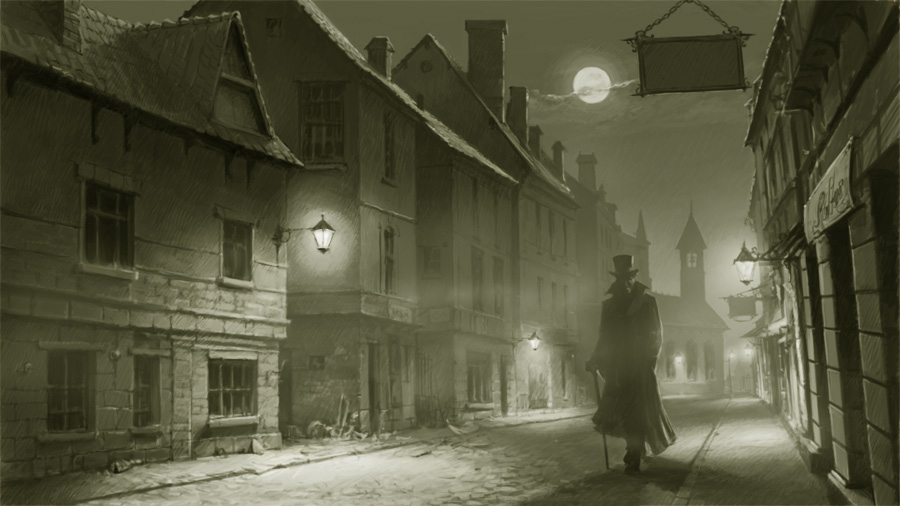
Seriously, how awesome would it be if we finally knew without a doubt who Jack the Ripper really was and why s/he killed all those prostitutes? I, for one, want to know what was going on inside his or her head. And I don’t buy into the old “I’m insane from syphilis” theory. It’s so pedestrian. But I suppose our not knowing has forced us to create a real person of sorts. We gave him a name (well, that one letter helped), we psychoanalyzed him, we gave him a top hat and a doctor bag and a flashing Lister blade. Yes, we, the people, created Jack the Ripper.

Why my obsession with Jack the Ripper? Why not, I say? No one can out-murder him. And it just so happens he is the inspiration for the novel I wrote for my MFA thesis, which I am now completely and utterly rewriting to get back to my original vision instead of the transparent autobiography it had become. Of course, my Ripper isn’t a man, doesn’t carry a doctor bad, and doesn’t kill hard-working prostitutes. Lazy ones, perhaps. (I do hate lazy prostitutes.)

A dead girl.


An English moor.
A mysterious killer.
And a creative writing student.
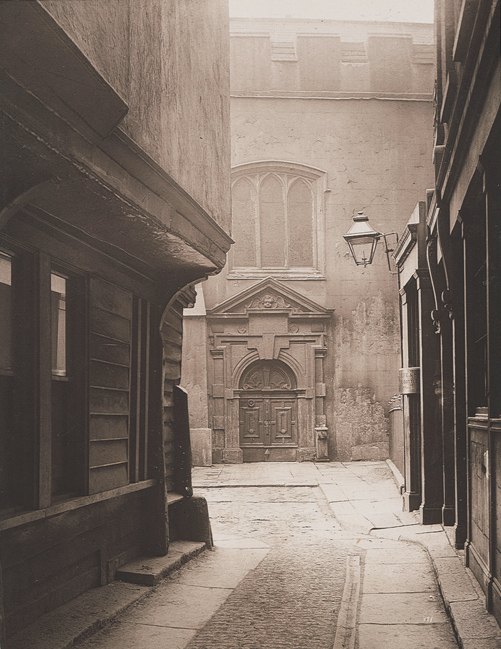
In Gaslight Alley.


Dreamweaver

Even in my dreams I like to control things because, last night while in one, I thought up an idea for an adult novel. I know, what the hell do I know about being an adult let alone writing for them. But it seemed kind of cool and I ran with it. Three women, all friends and all with their own expertise, run a business. The business happens to be procuring real estate for vacation homes. One woman is an expert in real estate, another in travel, and the third in design or something. Clients would approach them to find and decorate a property overseas.

So it wasn’t exactly thrilling.

My brain then transformed the idea into three elderly women in the jewelry business who had their own reality show. Two very stark and emaciated women enter the shop looking for jewelry to complete their outfits of sheer belly dance choli tops and harem pants. Neither woman had ever worn anything that was related to monotheism.

I can’t make up this stuff.

But even when I awoke, I thought there might be something to my original vision of three friends in some kind of cool business together. What the plot could be, I have no idea.

Coincidentally, my friend relayed a dream she had of us about to fight high school zombies until she becomes scared and runs away leaving me to kill them all myself. Now this is a story! But not one I’m going to write.

These thoughts of dreams led me to come up with the writing exercise I’m sharing here.

Take one of your dreams and write about it. The homework I gave my friend, who is distraught over her fear of zombies, was to rewrite the dream on paper. I told her she could be scared and run away, but she must write it into the story that she returns to help me kill all the zombies, and we are victorious.

The dream of my designing women is a bit harder to work with because nothing much happened, but I still think there might be something to these characters if I could put them into action.

You never know, one of your dreams may end up being the next vampire cult phenomenon.

Amazon Breakthrough Novel Award Contest

So there’s a contest going on hosted by Amazon to find new voices in fiction. http://www.amazon.com/b?node=332264011

There are two categories: General Fiction and YA Fiction. Luckily, I happen to write in the latter category, so I’ve decided to enter.

The title of my novel. Image stolen from the band of the same name's website.

Unfortunately, after revisiting the novel I wanted to use, I realize it kind of sucks. Oh, I used to think it was all that. In fact, it was the greatest thing I’d ever written and couldn’t possibly ever write anything better. What an idiot.

I had shopped it around, got several rejections, and a handwritten note from one of the editors that said they really liked it but couldn’t use it at the moment. I was even allowed to send the first 100 pages to a literary agent based on my pitch. She told me she didn’t quite connect with the main character as strongly as she needed to.

Now after several years away from it, I can totally understand why. My protagonist is so guarded even with me. There’s nothing warm or endearing about her. Sure, she’s all tough and jaded, the kind of girl you want in a fight, but there’s nothing vulnerable about her.

I had a very sharp conversation with her yesterday (and yes, I was talking out loud). I told her if there’s one person she has to be honest with, it’s me. I can’t tell her story, and it’s a good story, if she doesn’t let me in. I don’t even know who she was before the story started. Oh, of course I know what happened to her (we call that backstory), but I don’t know what she was like. What were her hopes and dreams, who were her friends, how did she act? Believe me, I filled out all the personality/characterization sheets, but I was going on what she was telling me, and it wasn’t the whole truth. I’m not even sure if any of it was the truth or just what I was coming up with because she was not very forthcoming on her own. The main thing I’ve learned is that your protagonist cannot hide from you or the reader. Sure she can hide her true self from the other characters until it’s necessary, but in order to make a connection, she’s got to be real.

Good news: I might have gotten a glimpse of her last night, and I’ll be hounding her the rest of the day on giving me more. Bad news: from what she’s showing me, my whole story is going to change. Well, not the plot things, but definitely how she acts, how she reacts, the relationships she forms with people. I don’t think I can revise the first 3000-5000 words by the time submissions open, which consequently is at midnight. And though I’m a little more than bummed if I don’t get a chance to enter, at least I’ve been made aware of this fatal mistake. (Thanks, K, for that!) Who knows? I might just get accepted on another round of submissions.

You Can’t Judge a Book by Its Cover, But You Can by Its Opening Line

I’ve been thinking a lot about opening lines/sentences. Mostly because I’m supposed to have another installment in my serial fiction posted by Monday at the latest (my own deadline), and I can’t seem to find a way to start it. I know what’s going to happen but damned if I can fill that blank page. (So I know that technically this isn’t considered an opening line as it is a continuation, but for someone who might stumble upon it at some point, it is crucial that they want to go back and read the previous installments.)

The opening line is so important because every other word hangs on it. It’s got to be strong, evocative, surprising, and a whole host of other adjectives every writer knows and dreads. Not only do those first few words carry the weight of the entire piece on its shoulders (if it had any), but they are also the basis for our audience’s approval. How many times have you gone into a bookstore, picked up a random book because you liked the cover art, read the first sentence, and put it back down again? Granted, some of us may read the first few sentences and then do that, but really, it’s that first one that strikes an impression.

Maybe in that nano-second it takes to read the first few words strung together into a cohesive (or sometimes not) thought, your subconscious decides whether it’s worth reading a little more, which you do, only to be disappointed by the drivel that comes next. Now you have the added agony of trying to top that first line in everything else you write. (Writers are experts at self-torture in so many ways.)

As I was walking into hospital yesterday, an opening sentence just popped into my brain. (That is how it usually works–don’t try to create one on your own, don’t try to coax, threaten, wrangle, bribe, or even beg those first words into existence. It won’t work. We are masochists [spell check told me this wasn’t a word, but I don’t care] not sadists.)

Here it is: When the MRI tech asked if I was claustrophobic, I told her no because I’d been locked in a coffin before.

If I was to analyze this sentence, here’s what I would say: First, I would want to know two things: 1) what was the speaker getting an MRI of and why? what had happened leading up to this event? 2) how the hell did the speaker get locked in a coffin? Would I want to read more? Sure, but that’s just because I’m a sucker for the word “coffin.”

I can tell you with some certainty that I will not be writing a story based on this sentence anytime soon or otherwise, but I can guarantee that if I were, it would not be about vampires, zombies, or wrongfully-pronounced dead people. No, it would have to be something much more spectacular.

Surprise! The opening line should not give away the rest of the story, but merely hint at the wonders to come. (Ok, I’m going to be cliché now and say this is called the hook.)

If you’re a writer and have managed to capture anything on the page, look at your opening sentence (or line if you’re a poet). Does it live up to the same standards you use when evaluating other writers’ works? If it doesn’t, never fear. Until that sucker gets published, there’s always room for improvement. And sometimes you may have to get to the end of your piece before you find just the right way to begin it.