To Pants or Not to Pants: The Age-Old Question

After two + years of post-grad education, a year of working 12 hour days, Christmas holidays, and shoulder surgery, I’ve decided to work on the 10th reincarnation of my MFA thesis.

I’ve always prided myself in being a pantser. Characters grew organically on the page and forged their own conflicts and resolutions. And while that’s great, more often than not, those stories were a million miles away from my original visions. I read recently in Damon Knight’s Creating Short Fiction: The Classic Guide to Writing Short Fiction, that there are four stages of writing:

creating short fiction

  1. The daydream stage when you are basically writing for yourself.
  2. The trivial stage when you are trying to break free from your fantasy shell but you haven’t quite cracked it yet.
  3. The technical stage when your stories are reasonable but lack structure or character.
  4. The professional stage when you have finally arrived as a writer.

Looking back, I think, in a way, that pantsing my past novels had actually hindered my goal of reaching stage four. I, as the author, was not in control of what I was writing. I relied on my characters to tell me where they wanted to go and what they wanted to do, and I know every writer longs for having this type of automatic writing experience, but it doesn’t allow the writer to tell the story only he or she can.

In fact, every time I tried to go back and rewrite or revise my finished novel, I couldn’t do anything with it because I didn’t like the main character or the story line. What else is there, you ask? I loved my setting and I loved my original idea of having a modern-day-Jack-the-Ripper-type murder mystery set on the English moors. Unfortunately, my novel didn’t even have a murder; it only had a disappearance, and it had more to do with The Phantom of the Opera than Jack the Ripper.

So after years of frustration, I decided just to rewrite the whole damn thing. And when I say “rewrite,” I mean start from absolute scratch. New characters, new plot, new everything. It took me years of not reading my original novel to be able to get it out of my head long enough for me to come up with new ideas that had nothing to do with the old ones. It’s a really hard decision to trash an entire 300+ page novel that took two years to write and two years to shop around to publishers and agents, but I wasn’t happy with it on any level. Because some (read “most”) of the story had autobiographical overtones, it was necessary to get that story out in writing, put it behind me, and start from a place unencumbered by personal emotion.

My decision to go from pantser to plotter came about after reading First Draft in 30 Days by Karen S. Wiesner.

first draft

It’d been sitting in my writing book cabinet for I-don’t-know-how-long. I don’t even remember when I bought it. But I noticed it, started reading it, and thought, hey, if I can make an outline so detailed it could pass as a first draft, then I was willing to take up the challenge. Though I haven’t kept the same schedule Wiesner recommends, I have learned that my characters and my plot can grow organically through the outline process while still holding true to my original vision. Organic growth doesn’t just have to happen during the writing phase. And while some people may consider outlining a pre-writing strategy, it is just as valid and, I am convinced now, even more necessary than what we have come to call the drafting phase.

For the next several posts, I plan to write about my process of going through Wiesner’s system, using my own variations of her techniques, complete with images of my writing. I do this so that, if you too are at a crossroads in your writing, you can make the transition from pantser to plotter without the fear and shame that you are cashing in organic storytelling for prefabricated stories.

Around the Writer’s Block

Around the Writer’s Block: Using BRAIN SCIENCE to Solve Writer’s Resistance*

*Including Writer’s Block, Procrastination, Paralysis, Perfectionism, Postponing, Distractions, Self-Sabotage, Excessive Criticism, Overscheduling, and Endlessly Delaying Your Writing.

by Rosanne Bane

This is the postcard advertising a new book that I received in the mail. I don’t know where it came from, who sent it, or how my name and address ended up on this mailing list, but it’s like the universe is trying to tell me something.

Procrastination is my arch-nemesis, as well it seems is Perfectionism, Postponing, and Endlessly Delaying Your Writing. I think about what I’m writing all the time; I even visualize my story like a movie every night before I fall asleep but, when I sit down to actually write, I, well, sit there and not write. Nothing comes out right, nothing seems good enough, nothing is like how I had it in my head.

I had read another writer’s blog who said she wrote the first draft of her current novel in 6 weeks. Six weeks? Wtf?

She must not have a job.

Or she doesn’t constantly critique or edit herself and she just writes. Isn’t that what we all want? To just write?

It took me about a year and a half of graduate school to finish the first draft of the novel I am currently rewriting. Rewriting, in case you’re wondering, is worse than revising. It’s basically saying, “The first draft completely sucked and didn’t turn out the way I had originally envisioned it.” Moreover, it’s like saying, “Hey, I’m going to start working on a new story.” Except you can’t get the old characters, the old dialogue, the old plot out of your head and keep trying to make it work until you fail miserably.

So I might just take the plunge and buy this book.

For anyone also interested, here is what the back of the postcard says: (The parentheticals are mine.)

If you’re having trouble writing, it’s not because you’re lazy, undisciplined, or lacking in willpower or talent. (Thank God!) You just need to learn how to rewire your brain’s response to the anxiety of writing. (Or the anxiety of not writing, as it were.)

By utilizing the most recent breakthroughs in neuroscience, Rosanne Bane (I can’t stop saying Rosanne Barr in my head) details three habits every writer can develop to defeat writer’s resistance. As a writing teacher for more than twenty years, Bane has given thousands of writers the tools to break through writer’s block and other forms of writing resistance. 

Once you understand how your brain works (I’m not sure I want to know how my brain works, but okay), you can become the writer you’ve always wanted to be.

“Rosanne Bane’s ingenious application of research about our brains to the process of writing and her wise counsel overall can help writers at every level.” —Ralph Keyes, author of The Courage to Write and The Writer’s Book of Hope

You can find this book at http://baneofyourresistance.com/ and http://www.tarcherbooks.net/ .

Murder is Serious Business

I’m contemplating murder. Definitely more than one, but most likely less than three. An almost-three seems a good number.

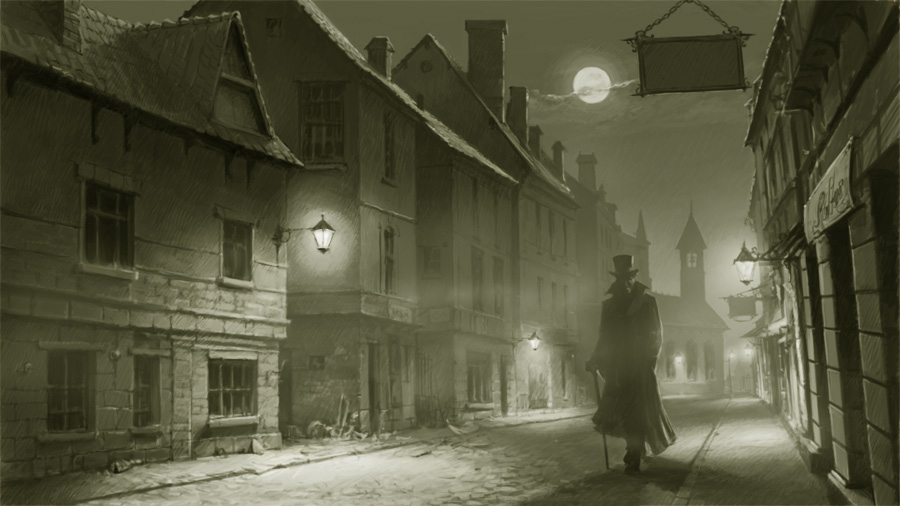
It’s enough to say, “Hey, there’s a crazy Jack the Ripper killer on the loose. Could I be his next victim?”

Plotting a murder takes a lot of work.

First, you have to figure out who you want to kill. And there has to be a reason why you want this person dead. I mean, senseless killing is just stupid. There are really only so many motives for murder: love, money, power, revenge, and a whole host of offshoots. I’m not adding self-defense to the list because after all it’s hardly premeditated and no one would blame you. And if anyone brings up the Saw movies or I’m a Rob Zombie backwoods psycho-cannibal, I will murder you.

Secondly, it helps to know who is doing the killing. This can over-complicate things. Why stop at one killer? Let’s make a copycat killer. Or better yet, let’s have two killers with two completely different motives that somehow intertwine. But it’s best to keep things simple. Someone has something, tangible or preferably not, that someone else wants. The only logical choice is to kill them. Yes, there must be logic even in murder.

And lastly, there has to be someone who discovers the body, otherwise it would just be pointless and stupid. So word to all those unsolved murder murderers out there–leave a clue for god’s sake! You know you secretly crave fame and attention for taking another person’s life (as long as you don’t get caught). Or do you want to get caught? The only way someone will know how truly great and powerful you are is if someone says, “Damn you, John Smith! You killed my wife!” Or I suppose you might also want forgiveness. Either/or.

Seriously, how awesome would it be if we finally knew without a doubt who Jack the Ripper really was and why s/he killed all those prostitutes? I, for one, want to know what was going on inside his or her head. And I don’t buy into the old “I’m insane from syphilis” theory. It’s so pedestrian. But I suppose our not knowing has forced us to create a real person of sorts. We gave him a name (well, that one letter helped), we psychoanalyzed him, we gave him a top hat and a doctor bag and a flashing Lister blade. Yes, we, the people, created Jack the Ripper.

Why my obsession with Jack the Ripper? Why not, I say? No one can out-murder him. And it just so happens he is the inspiration for the novel I wrote for my MFA thesis, which I am now completely and utterly rewriting to get back to my original vision instead of the transparent autobiography it had become. Of course, my Ripper isn’t a man, doesn’t carry a doctor bad, and doesn’t kill hard-working prostitutes. Lazy ones, perhaps. (I do hate lazy prostitutes.)

A dead girl.


An English moor.
A mysterious killer.
And a creative writing student.
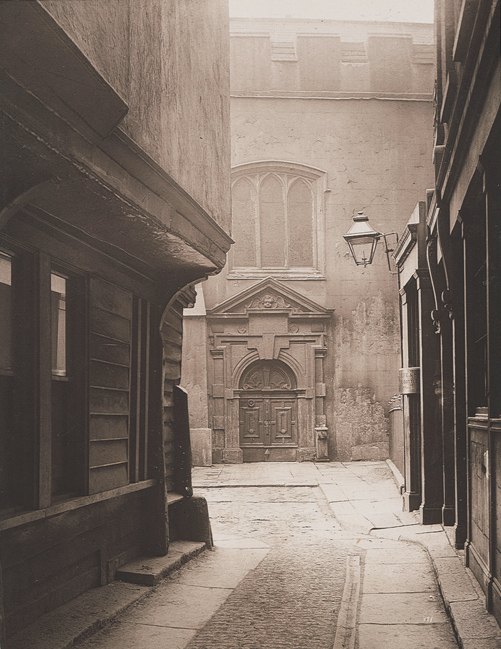
In Gaslight Alley.


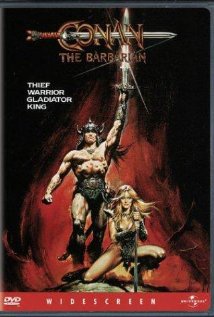
Conan the Barbarian–From a Writer’s Perspective

I must admit I was a bit scared to view this movie after approximately 27 years. When it was popular in the 80s, I must have watched it a thousand times because I was super into anything Dungeons & Dragons like, and I never missed a showing of it on TV (and I swear it was on every Saturday afternoon). The reason I was so scared was because I had recently watched Red Sonja on Netflix, another Dino de Laurentiis film from the era that I had once loved, and it was so horrible I was embarrassed for myself for once liking it.

However, I was pleasantly surprised with Conan, and it is still a movie that can live up to today’s standards (mostly). In fact, as far as storytelling goes, it far surpasses a lot of the crap movies that are out there now.

First, Conan the Barbarian (oh, did I mention this is the Arnold Schwarzenegger version) is an epic tale and embodies most of the conventions we assimilate with epic literature: it’s written in a formal style on a serious subject whose main character or protagonist is of a quasi-divine nature. The hero’s actions often determine the fate of a nation and involve super-human deeds and battles with supernatural beings. There is also an element of ceremony or ritual, and a vast setting that encompasses lots of travel.

Aside from just being a great story all around, Conan is a master of showing character through action. By this I don’t mean sword fights because, let’s face it, the fight choreography is a little lame by today standards. Rather, I mean we see the true nature of Conan through his actions and not through dialogue. He actually doesn’t speak much at all and has the least amount of dialogue of any of the characters. But we are still able to see his struggle with his internal need and his desire for the external goal by small actions.

A perfect example of this is when Valeria begs him to forget about saving King Osric’s daughter from Thulsa Doom and take the jewels and love they have at the moment and run away. Without speaking, Conan embraces Valeria back in a sort-of agreement but stares at Thulsa Doom’s talisman over her shoulder, which represents his desire to avenge his family’s death. The next morning, Valeria wakes up alone.

Any screenwriter of any genre would do well to study this movie for character’s actions/reactions as well as a lesson in using dialogue sparingly to convey only the most important information.

Truly, this is an epic movie.

Pre Frenzy Week 3- We Got the Beat

By now you’ve done some work on your characters and found out what makes them tick. Hopefully you’ve discovered their major character flaw through listening to their back story. You’ve figured out what it is they need most in life even if they haven’t figured it out yet. You’ve also come up with a situation, a quest so to speak, to help them get what they want. After all, that’s what storytelling is all about–creating a situation that forces your protagonist to get over himself and live a better life. (Yes, even in tragedy and death the protagonist grows.)

Last week’s exercise was a sort of fill in the blanks of the ten elements of screenwriting. Here’s an example of what yours might look like:

1. Back Story— Rumer’s father, an assassin for SI:7, is accused of treason against the King of Stormwind and executed in front of her and her sister, Whisperra. While trying to help Rumer escape their father’s murderers, Whisperra is kidnapped, and Rumer is left to fend for herself. Growing up alone and despised for her family name, Rumer takes to drinking and refuses to form close relationships with anyone except her giant saber mount and companion. She travels Azeroth searching for her sister.

2. Internal Need–to trust and open herself up to others without fear of abandonment; to allow others to help her.

3. Inciting Incident–While chasing yet another lead on her sister’s whereabouts, she learns her father’s charge of treason could have been part of a larger conspiracy against the entire Stormwind Alliance.

4. External Goal–to stop the murder of King Varian Wrynn of Stormwind.

5. Preparation–She infiltrates SI:7 to confront Master Mathias Shaw, who supposedly ordered her father’s execution. She gathers a group of would-be heroes, a healer, a hunter, a magic user, and a warrior, to raid the conspirators’ stronghold and rescue her sister. She devises a strategy for stopping the assassination attempt on King Wrynn.

6.Opposition–Death Knight Malthrassus, advisor to the king and head of covert operation within the Empire to destroy the Alliance. (By the way, it’s important to do just as much character work on your antagonist as well to discover his/her character flaw, internal need, and external goal. You might want to look for something in his/her back story to create sympathy. Antagonists need not be wholly evil, just as protagonists should not be perfect.)

7. Self-Revelation–After rescuing her sister, Rumer knows that together they can clear their father’s name and stop Malthrassus from destroying the Empire.

8. Obsession–Dark Moment: Whisperra is mortally wounded during the escape, and Rumer is left alone once again. New Stimulus: She will avenge her sister’s death by asking her companions for help.

9. Battle–While her friends and SI:7 armies come to her aid, ultimately she must fight Malthrassus alone before he assassinates King Wrynn.

10. Resolution–Rumer and her merry band of heroes are honored by the King of Stormwind. Whisperra’s life is commemorated in a statue. Their father’s name is cleared. The leader of SI:7 offers her a position as his second-in-command.

…or some reasonable facsimile.

So while you were exploring the elements as they pertain to your own story, you probably started getting ideas for scenes. Great! Now it’s time to connect the dots and really begin to plot out your script by creating a beat sheet or step outline.

Sometimes you’ll see the word “beat” written within a script. This generally indicates a moment of pause for dramatic effect before a reaction or response. As writers, we don’t want to dictate every action a character will make–that’s the actor’s job–but there may be a specific place where we want to make sure the change of action/reaction isn’t missed.

A beat is also an exchange of behavior in action or reaction. Beat by beat these changing behaviors shape the turning of a scene. This will be discussed more next week when we work on subtext, but for now think of beat as the motivations behind each character’s actions or dialogue: to beg, to condone, to scorn, etc.

For our purposes this week, a beat sheet (it’s very hard not to write beet sheet or beat sheat) is a one or two-sentence statement that simply and clearly describes what happens in each scene. It can also be called a step-outline in which you number each scene, describing not only what happens in it, but how it builds and then turns again. Remember, each scene should attempt to answer a question as well as pose a new one. In this sense, you can also think of each scene as its own little cliffhanger because what happens in one scene should naturally move the story forward to the next one.

As we begin to plot out our story based on the revelations we’ve made on our characters, their actions and reactions, we also begin to think about structure. The most common structure you’ll probably be working in is the three-act structure. And once you grasp the inner-workings of each act, it becomes much easier to plan scenes.

Here’s a brief overview of each act.

Act One: We meet the major (and some of the not so major) characters in the story, particularly the protagonist. In a few brief scenes, we establish the opening value of the story (positive or negative or somewhere in between), the status quo of the protagonist’s life up to this point, perhaps a glimpse at his or her internal need, and a bit of back story. There may also be the beginnings of a subplot or two. But the biggest thing that happens in Act One is the Inciting Incident–something must happen to upset the status quo. It may also upset the protagonist because, remember, he has a character flaw that is trying to prevent him from acting. (Think about what he fears most.) Next, we introduce some kind of external goal that the protagonist thinks will solve the problem presented by the inciting incident and make everything better. This comes directly out of your premise statement. And to end the first act, we must see the protagonist taking the initial action to achieve that goal. This can be called a plot point, turning point, or first major reversal. The opening value has just changed in a big way.

Act Two: This is the bulk of your story and is all about creating conflicts, barriers, and antagonism. Create progressive complications by gradually raising the stakes. How far is your protagonist willing to go to achieve this goal? With each action and each reaction to these complications, she will pass the point of no return and a new level of conflict is aroused. This is also where we see our character preparing herself and devising strategies to overcome each new obstacle. We meet the antagonist full-force. We witness the strength and magnitude of all his resources and power so that it’s no wonder our protagonist fails. And finally, our main character must face her darkest moment. This is the moment when she becomes conscious of her internal need and despite losing everything, she has to continue toward that goal–even if it means death. Just as Act One ended with a plot point, so does Act Two. Our main character, now obsessed with achieving the external goal and the internal need, tries one more time. Think of what action, rather than dialogue, she will take.

Act Three: Short and sweet. We present our battle scene/climax/showdown/big finish. There is a moment of crisis in which the wrong decision at this time will lose the external goal for both the antagonist and the protagonist. There is no going back for either of them. There is no more planning. There is only doing. They square off. Who wins? Regardless of who does, our protagonist has to achieve his/her internal need. Anything left after the goal has been won is called the resolution. In a scene (or two at most) we can show the spread of climactic effects on other characters by bringing them all to one location like the beach or a party or a wedding. Now with everyone in one spot, we can wrap up any subplots, and we can provide a “slow curtain” for the audience to get their emotions under control. Didn’t you ever wonder why some people stay to watch the credits (myself included)?

Week 3 Exercise: Write a beat sheet/step-outline of your entire screenplay. Just one to two sentences will do, and it doesn’t matter where you start either. Sometimes it might be easier to start toward the climax and work your way backwards. Another idea is to write each scene on an index card then arrange them in an order that seems sensible and logical to you. If you’re a visual writer, and you probably are if you’re interested in screenwriting, it might be easier to visually see your story enfold before you as you shuffle cards into order. And don’t forget to include subplots as well as the main conflict.